
Louisiana Civil Court Records
Louisiana civil court records are public documents held by the Clerk of Court in each of the state's 64 parishes. These records cover lawsuits, judgments, injunctions, successions, property disputes, and other civil matters filed in district courts across the state. You can search civil court records online through statewide portals, by visiting the clerk's office in person, or by submitting a written request by mail.
Louisiana Civil Court Records Quick Facts
What Are Louisiana Civil Court Records
Civil court records in Louisiana document disputes between private parties that do not involve criminal charges. These cases are heard in the district courts of each parish. The Clerk of Court files and stores all civil case documents, and those records are open to the public under the Louisiana Public Records Act (La. R.S. § 44:1-41).
Civil cases in Louisiana cover a wide range of legal matters. Personal injury lawsuits, contract disputes, property line disagreements, debt collection actions, and foreclosures are all civil matters. Successions (probate), name changes, and guardianship proceedings also go through the civil court system. So do domestic relations matters such as child custody and support. Each filed case gets a case number, and all documents submitted by the parties become part of the public record.
The main civil court record types in Louisiana include:
- Petitions and complaints (the first document filed to start a case)
- Answers and exceptions filed by the opposing party
- Motions and orders entered during the case
- Judgments and decrees signed by the judge
- Succession filings and probate documents
- Injunctions and temporary restraining orders
- Consent judgments and settlement agreements
Note: Juvenile court records, adoption proceedings, and some mental health cases are sealed by law and not part of the public civil court record.
Louisiana Court System for Civil Cases
Louisiana has a multi-level court system that handles civil matters. At the trial level, each parish has a District Court where civil cases are first filed. Appeals go to one of five Circuit Courts of Appeal based on geography. The Louisiana Supreme Court is the highest court and hears cases from all five circuits.
The Louisiana Supreme Court at 400 Royal Street in New Orleans maintains opinion archives and argument dockets. Published civil case opinions from 1996 through 2004 are available through the court's online search tool. Historical archives covering records from 1813 through 1920 are held at the Earl K. Long Library at the University of New Orleans. As the court states, those case files "include maps, surveys, printed briefs, and a host of other documentation. Often these are the only extant copies."
The five Courts of Appeal each serve a geographic area of the state and handle civil appeals from district courts in their region. Each circuit maintains its own docket search tool. The First Circuit covers the Baton Rouge area and many south-central parishes. The Second Circuit covers northern Louisiana including Shreveport and Monroe. The Third Circuit serves southwest Louisiana including Lafayette and Lake Charles. The Fourth Circuit covers New Orleans and the surrounding area. The Fifth Circuit handles the parishes of Jefferson, St. Bernard, Plaquemines, and St. Charles.
The Supreme Court's e-filing system, available at cdx.lasc.org, is reserved for attorneys who are members in good standing of the Louisiana State Bar Association. Public users access lower court records through the parish clerk offices and statewide portals.
The Louisiana Supreme Court website provides public access to opinions, argument dockets, and court rules. The site notes that "Louisiana Supreme Court E-Filing allows counsel to electronically file documents with the Louisiana Supreme Court."
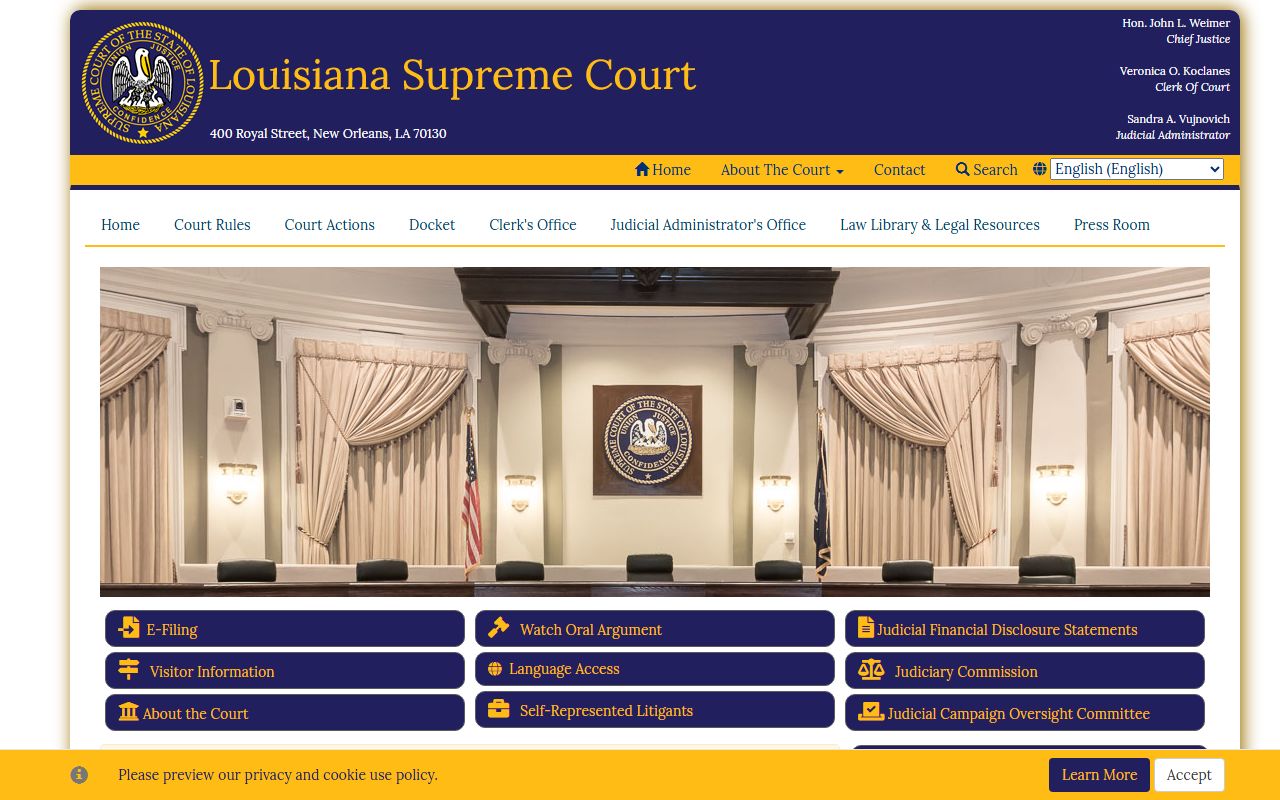
The Louisiana Supreme Court at lasc.org is the starting point for understanding the state's civil court structure, published opinions, and rules governing civil procedure.
How to Search Louisiana Civil Court Records Online
Louisiana offers several ways to search civil court records. The two main statewide portals are eClerks LA and Clerk Connect. Each gives access to records from multiple parishes. Some parishes also run their own search portals. For basic index searches, eClerks LA is free. For images and detailed records, subscriptions are required at most offices.
eClerks LA at eclerksla.com is the statewide public access system built by the Louisiana Clerks' Remote Access Authority (LCRAA). The LCRAA was created by the Louisiana Legislature in 2014 under La. R.S. 13:754, which requires all 64 clerks to participate. The system is free and open to the public for index searches of land, civil, marriage, and probate records. As eClerks LA states, "Today eClerks LA allows users to search all 64 parishes through the Statewide Portal." Users who need document images are directed to the individual clerk's website for premium access.
Clerk Connect at clerkconnect.com is a subscription portal used by many Louisiana parishes. It provides access to civil suits, criminal cases, property records, and land records. Parishes using Clerk Connect for civil record search include Allen, Natchitoches, Claiborne, Jackson, Richland, Bossier, Caddo, Lafourche, Lincoln, and East Baton Rouge. Subscription costs vary but typically run $20 for a 24-hour pass, $65 to $125 for 30 days, and $600 to $780 for annual access. The portal also supports e-recording and e-filing for participating parishes.
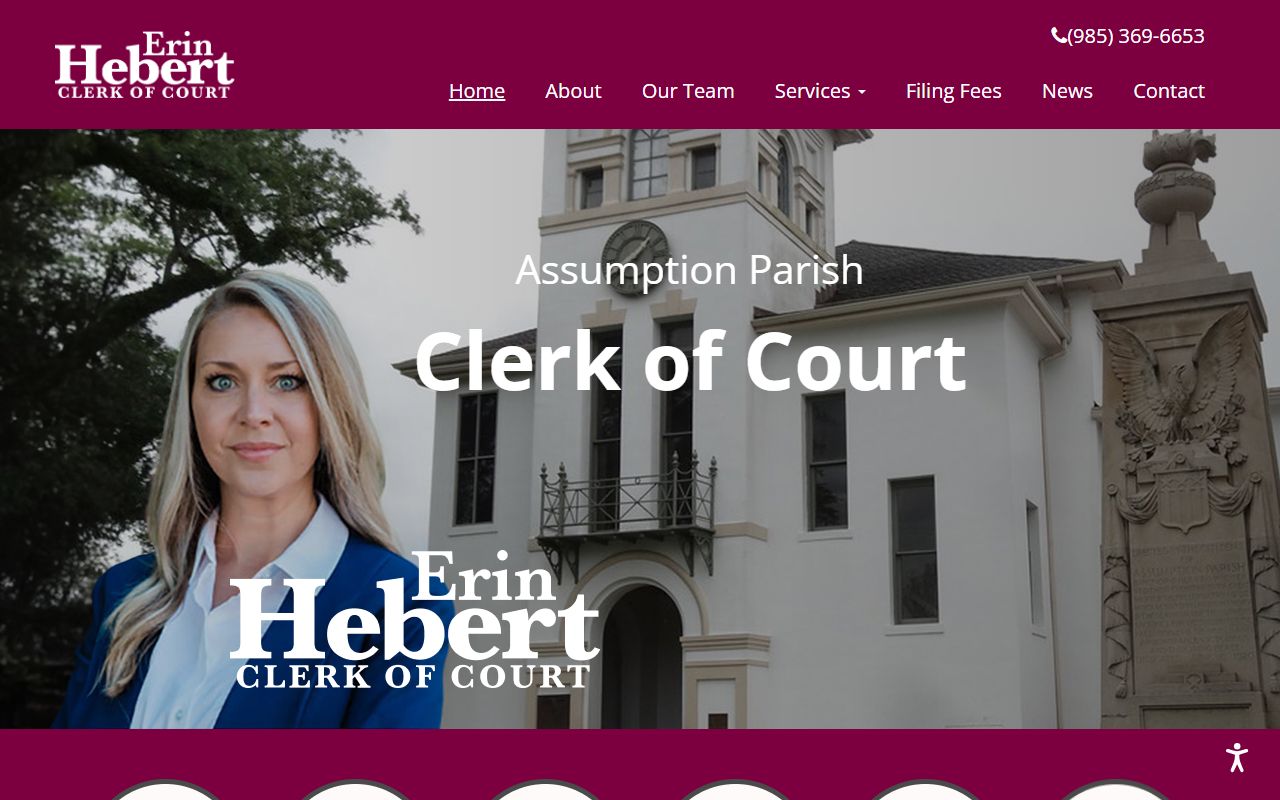
Clerk Connect gives access to civil, criminal, property, and land records across many Louisiana parishes from a single subscription account.
To search civil court records online, you typically need:
- Full name of one or both parties to the case
- Year the case was filed (approximate is fine)
- Case number if you have it
- The parish where the case was filed
Louisiana Civil Court E-Filing
Louisiana has expanded electronic filing for civil cases across many parishes. Attorneys can file civil pleadings electronically through approved portals. The Louisiana Supreme Court's e-filing portal at cdx.lasc.org handles appellate filings. For district court civil cases, many parishes use Clerk Connect or other parish-specific systems for e-filing.
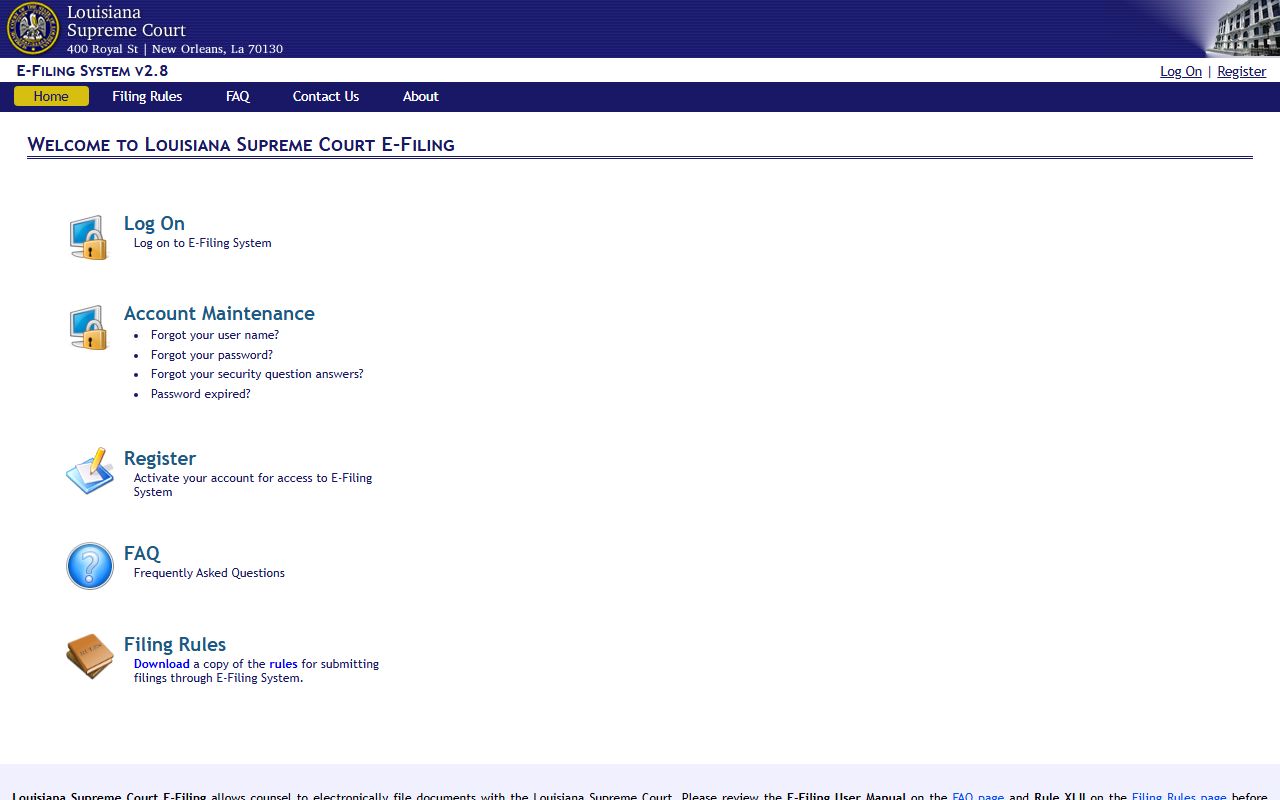
The Louisiana Supreme Court e-filing system requires attorneys to review the E-Filing User Manual and Rule XLII before registering. Non-attorneys filing in district court should check with the specific parish clerk about available options.
Act 352 of the 2025 Louisiana Legislature made changes to civil and criminal filing requirements that take effect January 1, 2026. Check with your local clerk or the Louisiana Supreme Court website for the latest rules.
In-Person and Mail Access to Civil Records
Every parish Clerk of Court office is open to the public for in-person record searches. Most offices are open Monday through Friday from 8:00 or 8:30 AM to 4:30 PM, and are closed on state holidays. Bring a valid photo ID when visiting. You can search indexes and view records at no charge. Only copies of records cost money.
As Louisiana law states, "Access to clerk of court records is free; patrons need pay only for copies made or requested." Copy fees are typically $1.00 per page for uncertified copies and $5.00 to $10.00 for certified copies, though these fees vary by parish. Some offices charge a card processing fee of 2.75% to 4% when paying by credit card.
Mail requests are accepted at most clerk offices. Write a letter that includes the names of the parties, the approximate filing date, the type of case, and your contact information. Include a self-addressed stamped envelope and payment for any copy fees. Some offices require photo ID copies for credentialed records. East Carroll Parish is one example where official records can only be delivered by mail, not by email or fax.
Note: Juvenile court records require a court order for access regardless of how the request is made.
Louisiana Public Records Law
Civil court records in Louisiana are public under the Louisiana Public Records Act, La. R.S. § 44:1-41. This law was first enacted in 1940 and guarantees that anyone can review or request public records without giving a reason. You do not have to be a party to the case. The law applies to all civil court files held by the Clerk of Court.
Louisiana Code of Civil Procedure Article 251 gives the Clerk of Court the duty to maintain and disseminate court records. The public is guaranteed access "unless a law specifically and unequivocally provides otherwise." Some records are sealed by court order or by statute. Sealed and expunged records are not available.
Records that are confidential by law include adoption and paternity proceedings, termination of parental rights cases, juvenile delinquency cases, child in need of assistance (CINA) cases, and mental health evaluation cases. Financial account numbers and Social Security numbers may be redacted even from public documents. If you believe a record has been improperly sealed, you can file a motion to unseal with the court.
Browse Louisiana Civil Court Records by Parish
Each of Louisiana's 64 parishes has a Clerk of Court who keeps civil court records for that parish. Select a parish below to find the clerk's contact details, online search portals, and local fee schedules.
View All 64 Louisiana Parishes
Civil Court Records in Major Louisiana Cities
Residents of Louisiana's larger cities file civil cases at the district court serving their parish. Select a city below to learn about local civil court access and courthouse details.